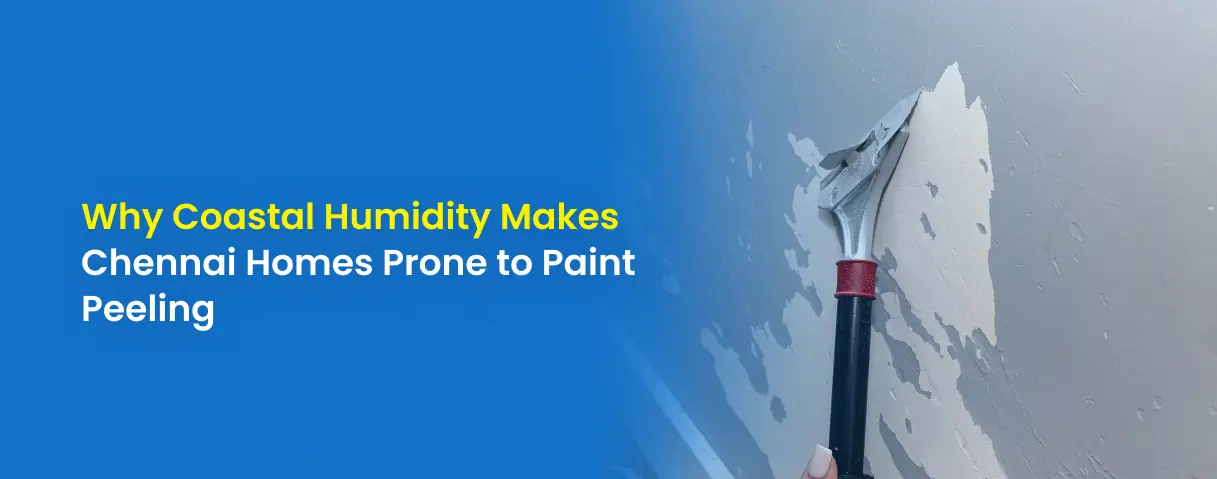
Chennai has a warm climate, high humidity, and long stretches of coastal air. These conditions can be tough on home walls. One common problem many homeowners notice is paint peeling, bubbling, cracking, or flaking from the surface.
At first, it may look like a small appearance issue. But peeling paint can point to moisture trapped inside the wall. If the cause is not addressed, the damage can spread and make the wall harder to maintain. Understanding why Chennai’s coastal climate affects paint can help you protect your home, avoid repeated painting work, and keep your walls looking fresh for longer.
How Coastal Humidity Affects Your Home Walls
Humidity means there is a high amount of moisture in the air. Chennai experiences high humidity because of its coastal location and warm weather.
High humidity can increase moisture exposure, particularly in poorly ventilated areas. Moisture can also enter walls through seepage, leaks, cracks, condensation, or porous surfaces. When moisture gets behind the paint layer, the bond between the paint and wall can become weak.
Over time, the paint may start to:
- Bubble
- Blister
- Crack
- Flake
- Peel away from the wall
This is why painting a wall again without fixing the moisture problem often gives only a temporary result.
Moisture Gets Trapped Behind the Paint
Paint needs a clean and dry surface to hold properly. When a wall contains moisture, the water has nowhere to go after the paint has been applied. As temperatures change, the trapped moisture can move towards the surface. This creates pressure between the wall and paint layer.
You may first notice small bubbles. Later, these bubbles can break and turn into peeling patches. This problem is more common on exterior walls, bathrooms, kitchens, balconies, and walls close to areas where water is frequently used.
Chennai's Coastal Air Contains Salt
Living close to the sea brings another challenge. Coastal environments can expose exterior surfaces to airborne salts. When moisture moves through masonry, dissolved salts can migrate toward the surface and form white, powdery deposits known as efflorescence. If these deposits are not properly treated before repainting, they can contribute to paint failure. Over time, this can affect the paint and the surface underneath.
You may also notice white powdery marks on walls. This is often called efflorescence. It happens when dissolved salts move through the wall and reach the surface. Painting over these marks without treating the underlying issue can lead to another round of peeling.
Poor Ventilation Can Make the Problem Worse
Humidity inside the home matters too. Bathrooms, kitchens, utility areas, and rooms with limited airflow can hold moisture for long periods. Steam from cooking and hot showers adds even more moisture to the air.
If windows remain closed and there is little air movement, walls may take longer to dry. Simple changes can help. Open windows when the weather allows. Use exhaust fans in kitchens and bathrooms. Give wet areas enough time to dry after cleaning or heavy use. Good airflow can make a noticeable difference over time.
Rainwater Can Enter Through Small Cracks
Chennai also receives heavy rain during certain parts of the year. Exterior walls can take a beating when rainwater finds weak points in the building. A small crack around a window, balcony, roof edge, or exterior wall may allow water to enter.
Once water gets inside the wall, it can travel to other areas. The paint may then begin to swell, crack, or peel. This is why peeling paint should not always be treated as a painting problem. Sometimes, it is a water-entry problem hiding underneath the paint.
Painting Over a Damp Wall Causes Problems
One of the most common mistakes is repainting too soon. A wall may look dry from the outside while still holding moisture inside. If paint is applied at this stage, the new layer can trap that moisture.
The result may look good for a few weeks or months. Then the same peeling begins again. Before repainting, the wall should be checked for dampness. Loose paint should be removed, damaged areas should be cleaned, and cracks or water-entry points should be repaired. The surface should also have enough time to dry before fresh paint is applied.
The Wrong Paint Can Reduce Paint Life
Not every paint works equally well in every environment. The correct paint system should be selected based on the substrate, interior or exterior location, moisture exposure, and manufacturer’s recommendations. However, no paint should be expected to compensate for active water leakage or unresolved dampness. The right product depends on whether the wall is inside or outside, the level of moisture, and the condition of the existing surface.
Exterior walls may need weather-resistant paint. Areas such as bathrooms and kitchens may need products that can handle higher moisture levels. But even good paint cannot fix a wall that has an unresolved dampness problem. The surface condition matters just as much as the paint itself.
Surface Preparation Makes a Big Difference
A fresh coat of paint cannot hide every wall problem. Before painting, old loose paint should be removed. Dust, dirt, salt deposits, fungus, and damaged areas should be treated. Cracks should be repaired properly.
If the wall has been affected by dampness, the source of the moisture should be identified first. Good preparation may take more time, but it can help the new paint stay in place for longer. This is particularly important in Chennai homes, where humidity and coastal weather can put extra pressure on painted surfaces.
Signs That Your Wall May Have a Moisture Problem
Keep an eye out for changes on your walls. Common warning signs include:
- Paint bubbles or blisters
- Peeling around corners
- Dark or damp patches
- White powdery deposits
- Musty smells
- Cracks that keep returning
- Paint falling off in layers
- Fungus or black spots
Do not wait until a large section of paint has fallen away. Finding the problem early can make the repair easier and may reduce the amount of repainting required.
How to Protect Your Chennai Home From Peeling Paint
You cannot control Chennai’s humidity, but you can reduce its effect on your home. Start with regular checks of exterior walls, balconies, bathrooms, kitchens, and areas near plumbing.
Keep an eye on leaking taps, pipes, roofs, and drainage points. Repair cracks before rainwater gets into the wall. Improve airflow in rooms where moisture builds up. Clean fungus as soon as it appears. If an exterior wall has repeated dampness, investigate the source instead of simply adding another coat of paint.
When repainting, choose products suitable for the wall and local weather conditions. Most importantly, give the surface proper preparation before painting.
Why Repainting Alone May Not Solve Peeling Paint
It can be tempting to scrape the damaged section, apply putty, and paint over it. That may improve the appearance for a short time. But if moisture is still entering the wall, the new paint can peel again.
Think of peeling paint as a warning rather than just a cosmetic problem. The visible damage is often only the part you can see. The actual issue may be behind the paint.
A proper inspection can help identify whether the problem comes from humidity, water leakage, cracks, poor ventilation, salt deposits, or an old damaged paint layer. Fixing the cause first can help the repair last longer.
When Should You Get Professional Help?
If paint keeps peeling even after repainting, it is worth getting the wall checked. Professional cleaning and painting services can help identify damaged areas, prepare the surface, remove loose paint, and address common causes before repainting.
This can be especially useful for larger homes, villas, rental properties, offices, and buildings with repeated dampness issues. Instead of repeatedly spending money on repainting the same wall, finding the actual cause can help you make a more practical decision.
Conclusion
Chennai’s coastal climate can be hard on painted walls. High humidity, salty air, rain, moisture, poor ventilation, and water leaks can all contribute to peeling paint. The key is not to treat peeling as only a surface problem. Check the wall, find the source of moisture, repair damaged areas, prepare the surface properly, and then repaint with a suitable product. Regular checks can also help catch small problems before they spread. Addressing moisture and surface problems before repainting can reduce the likelihood of recurring paint failure and unnecessary repainting.
Planning to repaint your Chennai home? Homecare Solutions provides professional painting services to help refresh walls with proper surface preparation and finishing. Contact us to discuss your painting requirements.